
Catalyst
Social
Apr 10, 2026
What it took to build this

Jeff Berk
CEO, TRIPKICKS
Catalyst
Social
Apr 10, 2026
What it took to build this
Jeff Berk
CEO, TRIPKICKS
Catalyst
Social
Apr 10, 2026
What it took to build this
Jeff Berk
CEO, TRIPKICKS
What it took to build this

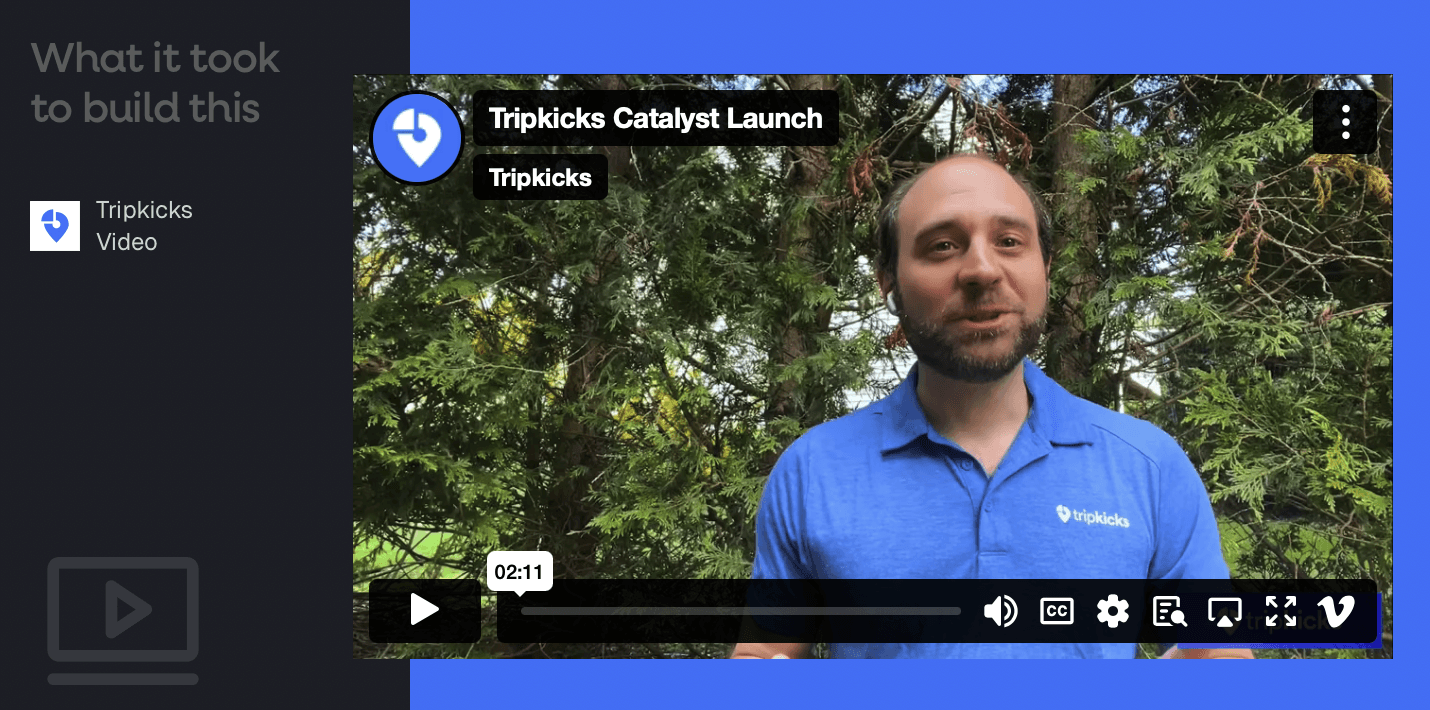
Tripkicks
Video
Travel managers have one of the most under-appreciated jobs in any large organization. They're responsible for getting thousands of people safely around the world — cost-effectively, compliantly, and sustainably — with a team that's almost never big enough for the scope of what that actually means.
I've spent years working closely with travel managers at some of the largest companies in the world. And one thing I've come to understand deeply is this: the challenge isn't figuring out what should be done. Every travel manager I've worked with knows what should be done in their program — preferred supplier adoption, sustainability initiatives, duty of care access, traveler communication, and so much more. They know what great looks like. The challenge is that there's so much they want to tackle, and not nearly enough bandwidth to get to all of it.
The past few years have made this worse. Global crises that required immediate response. Mandatory technology migrations that consumed months or years of focus. Unexpected TMC transitions. These weren't optional — they had to be addressed, and they took precedence over everything else. Beyond those, travel managers can take on some of the projects they care about, but so many important initiatives end up in the backlog — waiting for a window that never quite opens.
How we got here
Over the years, our clients have given us a front-row seat to some of the most complex travel programs in the world. We built traveler experiences for them — some fairly heavily customized. We got deep into what each program needed. We saw the patterns. We understood what actually moves behavior. And along the way, we quietly built a platform architecture that was more capable than we were using it for.
We've taken all of that — the patterns, the techniques, the understanding of what actually changes traveler behavior — and codified it. What started as a concept is no longer just a concept. It's here. We call it Catalyst.
What the intelligence layer actually does
Here's what hasn't existed until now: a system that continuously analyzes traveler behavior and program performance, determines what each traveler needs to hear and when, and then delivers that guidance and executes on it automatically — across the entire trip journey. Pre-trip, at the moment of booking, during the trip, post-trip, and through expense. Not just the technology to reach travelers, but the consolidated knowledge of what actually works, already built in.
When a traveler's booking pattern changes, the guidance adjusts. When peer data strengthens a message — like knowing that 90% of colleagues traveling to Dallas consistently choose the preferred hotel — the system incorporates it. When behavior improves, the messaging backs off. That cycle — analyze, guide, adapt — runs on its own. And the travel manager can see all of it: what's working, what's changing, and where to adjust priorities to drive different results.
There's also an AI-powered experience woven throughout the entire journey, giving travelers immediate answers to their questions and reducing the volume of requests that would otherwise land on the travel manager's desk.
What this means for the travel manager is that they're elevated to exactly where they were hired to be. They were hired to be the architects of their programs — not the copywriter, graphic designer, or data analyst drafting every message, creating every visual, and building every campaign. Catalyst handles the execution of that full cycle — the analysis, the communication, the personalization, the measurement, and the adaptation. All of their priorities run simultaneously, each one personalized to the individual traveler based on actual behavior and history. The travel manager focuses on the strategy.
Why this hasn't been done before
The technology is new and evolving — that's part of it. But it's also the consolidated knowledge, and honestly, the focus. When you look at the major players in our industry — the companies that truly have the resources to do anything — this isn't where they're investing. Their focus has been on maximizing distribution margins, making transaction processing more efficient, and optimizing supplier revenue. Those are incredibly important for those organizations. But what's important for the enterprise is different. Optimizing the travel program, focusing on the things that matter for each company specifically — that's a fundamentally different mission. And you can't build this without understanding what actually drives behavior change in corporate travel — not theoretically, but practically. That knowledge is built into Catalyst from day one. The system is easily set up with a company's policies, suppliers, and brand, and the best practices and behavioral frameworks are already embedded, so nobody's starting from scratch.
Why this matters to us
Our clients helped inspire this. Catalyst represents an understanding of what they've been asking for, what's been missing in their programs, what we've seen taking up too much of their time, and what they'd do if they had the bandwidth. We've looked for commonalities across programs, worked to understand the problems that exist, and focused on figuring out what we can help solve. The companies we've had the privilege of working with pushed us and helped us get here. Thank you for that. This is as much yours as it is ours.
What we've built is something that hasn't existed in our industry before: the idea of a self-improving travel program. An intelligence layer that runs the full optimization cycle — analyzing what could be better, acting on it, measuring results, and adapting — continuously, without requiring the travel manager to execute every step.
Travel managers have one of the most under-appreciated jobs in any large organization. They're responsible for getting thousands of people safely around the world — cost-effectively, compliantly, and sustainably — with a team that's almost never big enough for the scope of what that actually means.
I've spent years working closely with travel managers at some of the largest companies in the world. And one thing I've come to understand deeply is this: the challenge isn't figuring out what should be done. Every travel manager I've worked with knows what should be done in their program — preferred supplier adoption, sustainability initiatives, duty of care access, traveler communication, and so much more. They know what great looks like. The challenge is that there's so much they want to tackle, and not nearly enough bandwidth to get to all of it.
The past few years have made this worse. Global crises that required immediate response. Mandatory technology migrations that consumed months or years of focus. Unexpected TMC transitions. These weren't optional — they had to be addressed, and they took precedence over everything else. Beyond those, travel managers can take on some of the projects they care about, but so many important initiatives end up in the backlog — waiting for a window that never quite opens.
How we got here
Over the years, our clients have given us a front-row seat to some of the most complex travel programs in the world. We built traveler experiences for them — some fairly heavily customized. We got deep into what each program needed. We saw the patterns. We understood what actually moves behavior. And along the way, we quietly built a platform architecture that was more capable than we were using it for.
We've taken all of that — the patterns, the techniques, the understanding of what actually changes traveler behavior — and codified it. What started as a concept is no longer just a concept. It's here. We call it Catalyst.
What the intelligence layer actually does
Here's what hasn't existed until now: a system that continuously analyzes traveler behavior and program performance, determines what each traveler needs to hear and when, and then delivers that guidance and executes on it automatically — across the entire trip journey. Pre-trip, at the moment of booking, during the trip, post-trip, and through expense. Not just the technology to reach travelers, but the consolidated knowledge of what actually works, already built in.
When a traveler's booking pattern changes, the guidance adjusts. When peer data strengthens a message — like knowing that 90% of colleagues traveling to Dallas consistently choose the preferred hotel — the system incorporates it. When behavior improves, the messaging backs off. That cycle — analyze, guide, adapt — runs on its own. And the travel manager can see all of it: what's working, what's changing, and where to adjust priorities to drive different results.
There's also an AI-powered experience woven throughout the entire journey, giving travelers immediate answers to their questions and reducing the volume of requests that would otherwise land on the travel manager's desk.
What this means for the travel manager is that they're elevated to exactly where they were hired to be. They were hired to be the architects of their programs — not the copywriter, graphic designer, or data analyst drafting every message, creating every visual, and building every campaign. Catalyst handles the execution of that full cycle — the analysis, the communication, the personalization, the measurement, and the adaptation. All of their priorities run simultaneously, each one personalized to the individual traveler based on actual behavior and history. The travel manager focuses on the strategy.
Why this hasn't been done before
The technology is new and evolving — that's part of it. But it's also the consolidated knowledge, and honestly, the focus. When you look at the major players in our industry — the companies that truly have the resources to do anything — this isn't where they're investing. Their focus has been on maximizing distribution margins, making transaction processing more efficient, and optimizing supplier revenue. Those are incredibly important for those organizations. But what's important for the enterprise is different. Optimizing the travel program, focusing on the things that matter for each company specifically — that's a fundamentally different mission. And you can't build this without understanding what actually drives behavior change in corporate travel — not theoretically, but practically. That knowledge is built into Catalyst from day one. The system is easily set up with a company's policies, suppliers, and brand, and the best practices and behavioral frameworks are already embedded, so nobody's starting from scratch.
Why this matters to us
Our clients helped inspire this. Catalyst represents an understanding of what they've been asking for, what's been missing in their programs, what we've seen taking up too much of their time, and what they'd do if they had the bandwidth. We've looked for commonalities across programs, worked to understand the problems that exist, and focused on figuring out what we can help solve. The companies we've had the privilege of working with pushed us and helped us get here. Thank you for that. This is as much yours as it is ours.
What we've built is something that hasn't existed in our industry before: the idea of a self-improving travel program. An intelligence layer that runs the full optimization cycle — analyzing what could be better, acting on it, measuring results, and adapting — continuously, without requiring the travel manager to execute every step.
Type something ...
Search
Popular Posts
Catalyst
Social
May 17, 2026
Research
Social
Apr 22, 2026
Product Launch
Social
Apr 20, 2026
Social
Blog & Articles



Subscribe to Tripkicks Updates
Learn About our Latest Innovation
Want to know about our latest updates and business travel innovation? Add your email below and subscribe to Tripkicks Updates.
Subscribe to Tripkicks Updates
Learn About our Latest Innovation
Want to know about our latest updates and business travel innovation? Add your email below and subscribe to Tripkicks Updates.
Subscribe to Tripkicks Updates
Learn About our Latest Innovation
Want to know about our latest updates and business travel innovation? Add your email below and subscribe to Tripkicks Updates.
© 2026 Tripkicks Inc. All Rights Reserved.
© 2026 Tripkicks Inc. All Rights Reserved.
© 2026 Tripkicks Inc. All Rights Reserved.